
PHOSPHATING PLANT
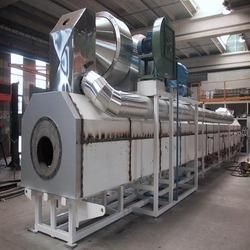
PHOSPHATING PLANT
| Usage/Application | Metal Finishing |
| Material | Mild Steel |
| Design Type | Standard |
| Voltage | 415 V |
| Automation Grade | Automatic |
| Capacity | Up to 100 Ton |
| Brand | GENERAL EQUIPMENT & ENGINEERING |
| Features | SCADA , LINEAR POSITION |
| Power Consumption | 120 kw |
| Max Temperature C | 100 |
| Surface Finish | Magnese Phosphating |
| Power Source | 415 V |
| Weight | 15 mt |
| Country of Origin | Made in India |
| Brand | GENERAL EQUIPMENT & ENGINEERING |
PHOSPHATING PLANT
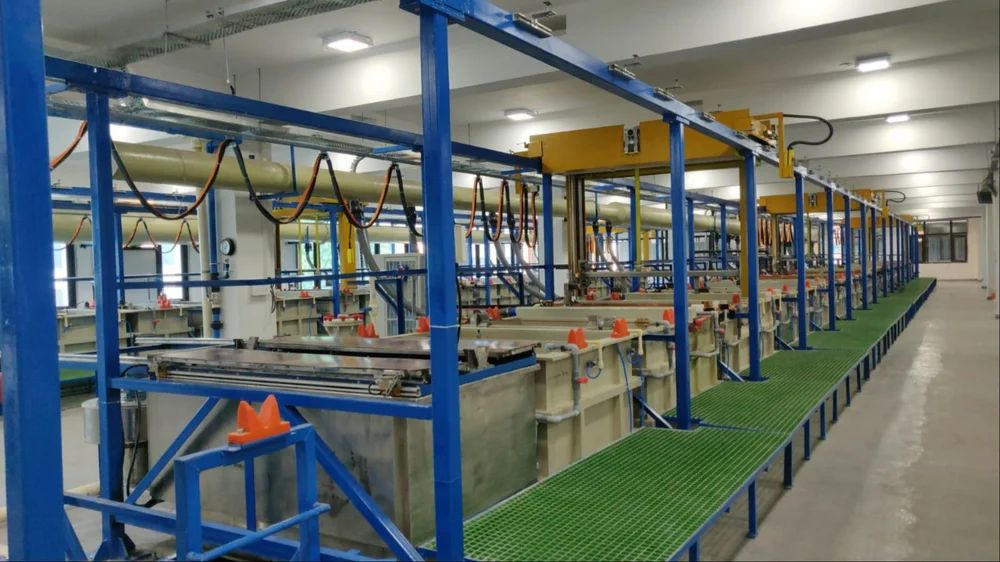
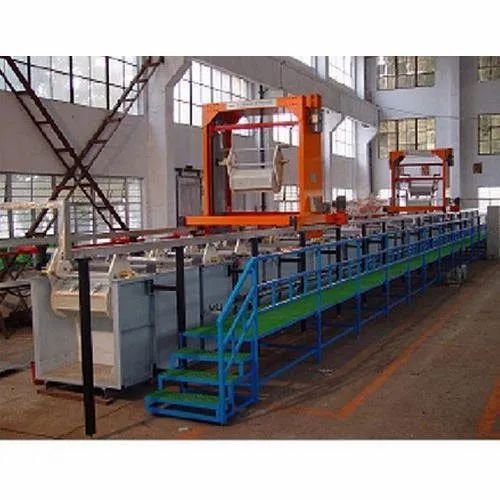
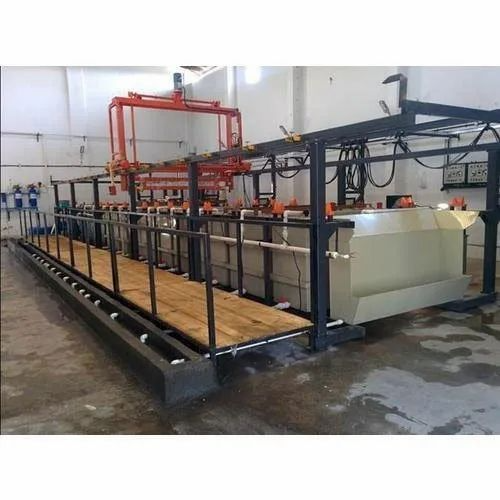
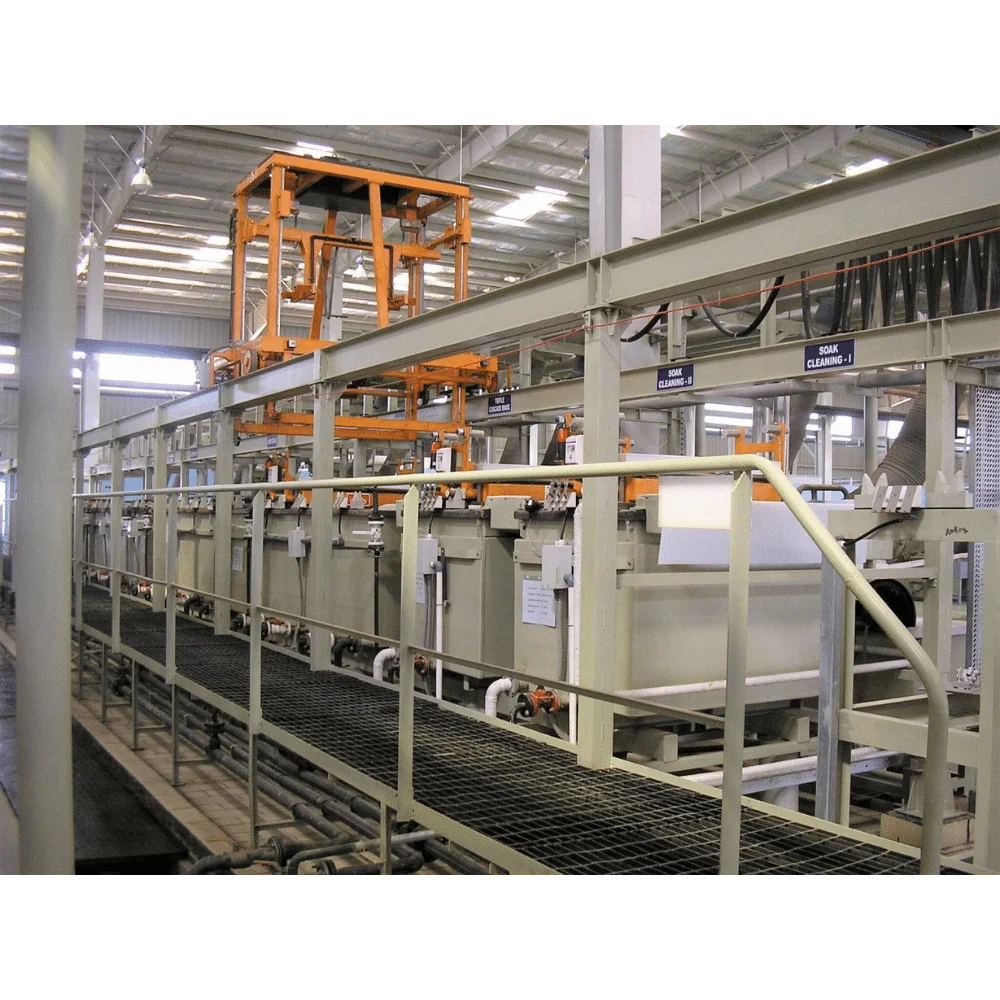
A phosphating plant is a specialized industrial facility designed to apply a phosphate conversion coating to metal surfaces. This coating process involves several steps and is critical for enhancing the properties of metal parts and components in various applications.
Key Components and Processes:
Pre-Treatment Stations:
Cleaning: Metal parts are first cleaned to remove oils, greases, dirt, and other contaminants. This can involve alkaline cleaning solutions, degreasing agents, or ultrasonic cleaning methods.
Rinsing: After cleaning, the parts are rinsed with water to remove any residual cleaning agents and contaminants.
Phosphating Baths:
Immersion or Spray Phosphating: Parts are either immersed in a phosphating solution or sprayed with it. The solution typically contains zinc, manganese, or iron phosphates, which react with the metal surface to form a thin, adherent phosphate layer.
Temperature Control: The phosphating process usually requires precise temperature control to ensure the correct chemical reactions occur.
Post-Treatment Stations:
Rinsing: After phosphating, the parts are rinsed again to remove any excess phosphate solution.
Passivation (Optional): Some processes include a passivation step to further enhance corrosion resistance. This can involve applying a chromate or other sealing agent.
Drying Stations:
Air Drying or Oven Drying: Parts are dried to remove all moisture. This can be done using air drying methods or by passing the parts through an oven.
Quality Control:
Inspection: The coated parts are inspected for uniformity, adhesion, and coverage of the phosphate layer. Quality control may involve visual inspection, thickness measurement, and adhesion tests.
Benefits of Phosphating:
Corrosion Resistance: The phosphate coating provides a protective layer that helps prevent corrosion of the underlying metal.
Paint Adhesion: Phosphated surfaces provide an excellent base for paint and other coatings, enhancing their adhesion and durability.
Wear Resistance: The coating can reduce friction and wear on moving parts.
Surface Preparation: It provides a clean, micro-rough surface that enhances the bonding of subsequent coatings or treatments.
Applications:
Phosphating plants are widely used in industries such as automotive manufacturing, aerospace, appliance production, and metal fabrication. They are essential for preparing metal parts and components that require high performance and durability, especially in environments where corrosion resistance and strong paint adhesion are critical.
By utilizing a phosphating plant, manufacturers can ensure their metal products meet stringent quality and performance standards, ultimately extending the life and functionality of the parts.